
RFID, UWB & Bluetooth Tracking
RFID, UWB, and Bluetooth technologies offer advanced asset tracking solutions vital for businesses seeking precise management of mobile assets. These systems utilise real-time location services (RTLS) to enhance asset security and operational efficiency. Ideal for tracking tools, equipment, and high-value items.
Proven Results
RFID, UWB, and Bluetooth technologies have transformed asset tracking by using real-time location services. This innovation optimises asset management, reinforcing security and operational efficiency significantly.
Benefits of RFID, UWB, and Bluetooth Tracking Technologies
RFID, UWB, and Bluetooth asset tracking technologies play a crucial role in the real-time location services (RTLS) landscape, providing businesses with a robust framework for managing assets efficiently. RFID (Radio-Frequency Identification) tags facilitate asset tracking by utilizing radio waves to communicate information between a tag and a reader. UWB (Ultra-Wideband) offers precise location tracking through short-range radio technology, making it suitable for indoor environments. Bluetooth technology, especially Bluetooth Low Energy (BLE), provides scalable solutions for tracking assets with moderate accuracy and low power consumption, ideal for a range of business applications.
One of the primary advantages of these technologies is their ability to enhance operational efficiency by providing detailed insights into asset utilization and movement. This capability allows businesses to optimize their workflows, reduce downtime, and improve maintenance scheduling. RFID is particularly effective in environments where quick and frequent inventory checks are required, as it allows multiple tags to be read simultaneously without direct line of sight, making it viable for industries such as manufacturing and logistics.
Moreover, integrating UWB and Bluetooth into asset tracking systems offers increased flexibility in deployment, allowing businesses to tailor tracking capabilities to their specific needs. UWB is particularly advantageous in dense environments like warehouses or manufacturing facilities, where high precision is necessary. Bluetooth, on the other hand, provides a user-friendly and cost-effective solution for scenarios where real-time monitoring is crucial but the precision levels required are moderate. This adaptability enables businesses across various sectors to implement a system that enhances asset security and management, leading to overall increased productivity and asset lifespan.
Revolutionise Asset Management with RFID, UWB & Bluetooth Tracking
RFID, UWB, and Bluetooth technologies are critical in the field of asset tracking, each offering distinct advantages for specific business needs. RFID tags use radio waves for communication, allowing for the identification and management of multiple assets simultaneously without the need for line-of-sight, which is particularly beneficial for rapid inventory checks. UWB, or Ultra-Wideband, provides precision in location tracking with short-range radio frequency technology, making it highly effective for indoor environments where accuracy is paramount.
Bluetooth, specifically Bluetooth Low Energy (BLE), is favoured for its scalability and low power consumption, making it suitable for a variety of applications requiring moderate accuracy. This adaptability is invaluable for real-time tracking in different industries, where maintaining asset visibility is crucial but high precision is not always necessary. Implementing these technologies enhances operational workflows and asset management efficiency.
When considering the deployment of RFID, UWB, or Bluetooth tracking systems, businesses should evaluate their specific environment and tracking requirements. Understanding the attributes of each technology aids in selecting a system that aligns with operational goals, thereby optimising asset management and ensuring asset security. The proper selection and implementation of these technologies can significantly improve productivity and asset longevity.
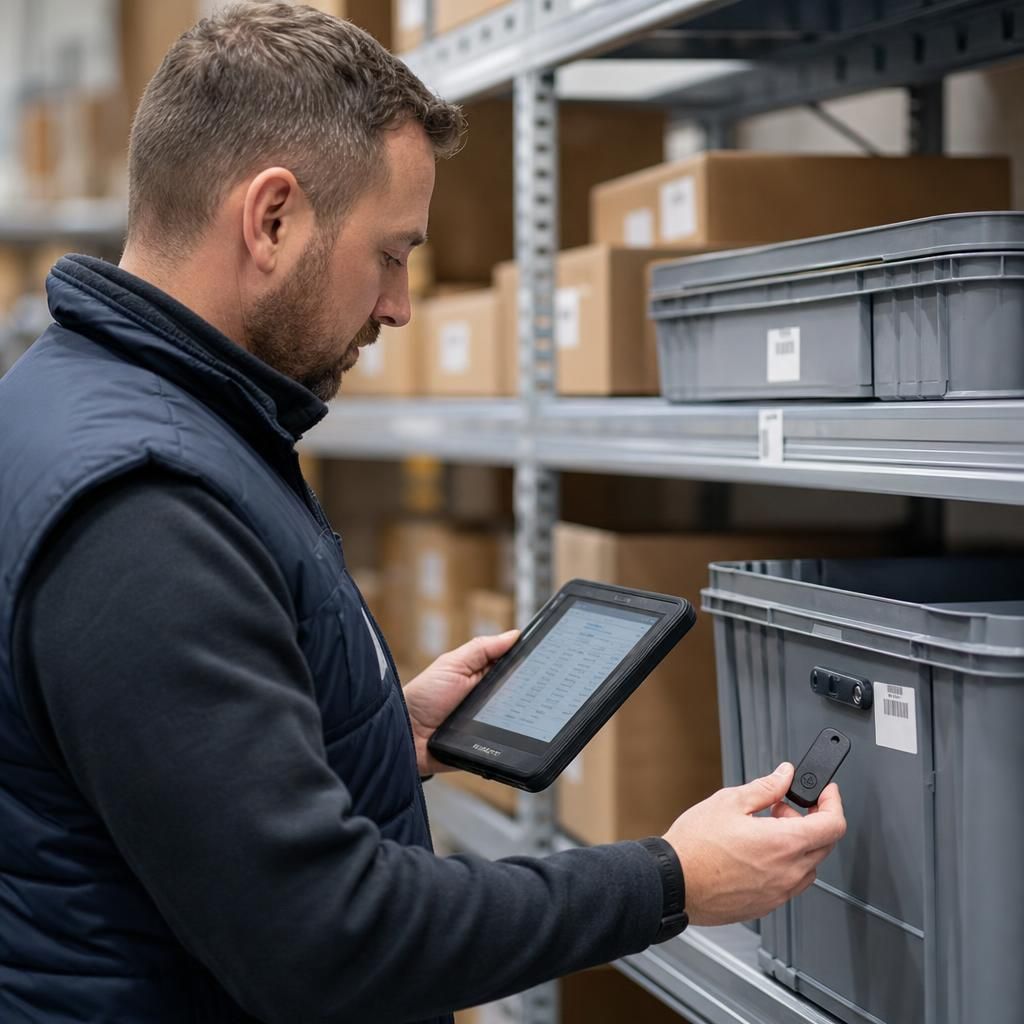
Advanced Asset Tracking Solutions with RFID, UWB, and Bluetooth Technologies
RFID, UWB, and Bluetooth asset tags are advanced tracking technologies designed to enhance asset management and operational efficiency. RFID tags, utilising radio-frequency identification, allow for simultaneous reading of multiple assets without line-of-sight dependency. UWB, or ultra-wideband, provides high precision tracking in indoor environments, essential for densely populated settings. Bluetooth tags, especially Bluetooth Low Energy (BLE), deliver low-power and scalable tracking options suitable for moderate accuracy needs.
The comparison among these technologies shows RFID is ideal for environments needing quick inventory checks, while UWB excels in scenarios requiring precise indoor location tracking. Bluetooth offers a cost-effective choice for real-time monitoring without demanding high precision. Businesses should assess their specific requirements and environments carefully to determine the most suitable technology for effective asset tracking.
Seamless Integration
Easily incorporate RFID, UWB, and Bluetooth systems into existing infrastructures for streamlined asset management.
Versatile Applications
Adapt to diverse industry needs using flexible tracking technologies suitable for various environments.
Real-Time Monitoring
Enable efficient real-time asset tracking to optimise operations and resource allocation.
Enhanced Security
Increase asset protection against theft and loss through advanced localisation methods.
High Precision Localization
Achieve pinpoint accuracy in asset tracking with UWB technology, ideal for indoor settings.
Energy Efficient Solutions
Utilise BLE technology for low power consumption and cost-effective tracking deployments.
Proven Reliability
Depend on mature and tested technologies for reliable asset tracking performance.
Scalable Solutions
Implement scalable tracking systems that grow alongside your business demands and assets.
Frequently Asked Questions on RFID, UWB, and Bluetooth Asset Tracking
What are the main differences between RFID, UWB, and Bluetooth tracking technologies?
RFID involves using electromagnetic fields to automatically identify and track tags attached to objects, while UWB provides high precision indoor location tracking through broad spectrum radio waves. Bluetooth LE supports low-energy asset monitoring.
How do RFID, UWB, and Bluetooth technologies integrate with existing asset management systems?
These technologies integrate seamlessly with existing systems using APIs, ensuring real-time data exchange and compatibility with enterprise resource planning (ERP) and other management systems, enhancing asset management efficiency.
Can RFID, UWB, and Bluetooth asset tags be used together in a single tracking system?
Yes, they can be integrated, offering complementary strengths like RFID's non-line-of-sight reading, UWB's precision, and Bluetooth's low energy benefits, tailoring solutions to diverse tracking needs.
How can businesses ensure the security and privacy of data collected through RFID, UWB, and Bluetooth tracking systems?
Implement strong encryption protocols and access controls, conduct regular security audits, and ensure compliance with data protection regulations to maintain the integrity and confidentiality of tracking system data.
What are the cost considerations when implementing RFID, UWB, and Bluetooth asset tracking systems?
Evaluate upfront hardware expenses, system integration costs, and maintenance fees. Consider scale and precision needs, as they heavily influence overall investment and potential return for asset tracking.
Customer Benefits
Enhance asset visibility and operational workflows with RFID, UWB, and Bluetooth technologies—optimise control, efficiency, and maintenance planning today.
Key Questions to Ask About Asset Tracking Technologies
What are the specific location accuracy requirements for your asset tracking needs?
Evaluate each technology's range, precision, and environment suitability to align with operational needs, maximising asset management efficiency and security. Consider existing infrastructure, integration capabilities, and future scalability demands.
How do environmental factors impact the performance of RFID, UWB, and Bluetooth tracking systems?
Consider material obstructions, interference sources, and signal range to optimise tracking system performance. Different environments affect signal strength and accuracy, influencing your technology choice for asset tracking.
What are the cost implications and ROI expectations of implementing RFID, UWB, and Bluetooth asset tracking systems?
Analyse upfront costs, integration expenses, and long-term savings in asset lifespan and operational efficiency. A well-implemented system typically offers substantial ROI through enhanced tracking accuracy and reduced asset loss.
How does integration with existing systems affect the implementation of RFID, UWB, and Bluetooth tracking technologies?
Seamlessly integrating asset tracking systems with existing infrastructure enhances data synchronisation, operational coherence, and scalability. Prioritise compatibility and ease of integration to minimise disruptions and maximise technology benefits.
What are the data security and privacy considerations when implementing RFID, UWB, and Bluetooth asset tracking systems?
Prioritise secure data transmission and storage, employ encryption standards, and comply with privacy regulations to protect sensitive information and maintain trust in asset tracking systems.